


“Astrology is a language. If you understand this language, the sky speaks to you.”
- Dane Rudhyar
As a consulting astrologer, I have a message for you: please don’t quit therapy for an astrologer.
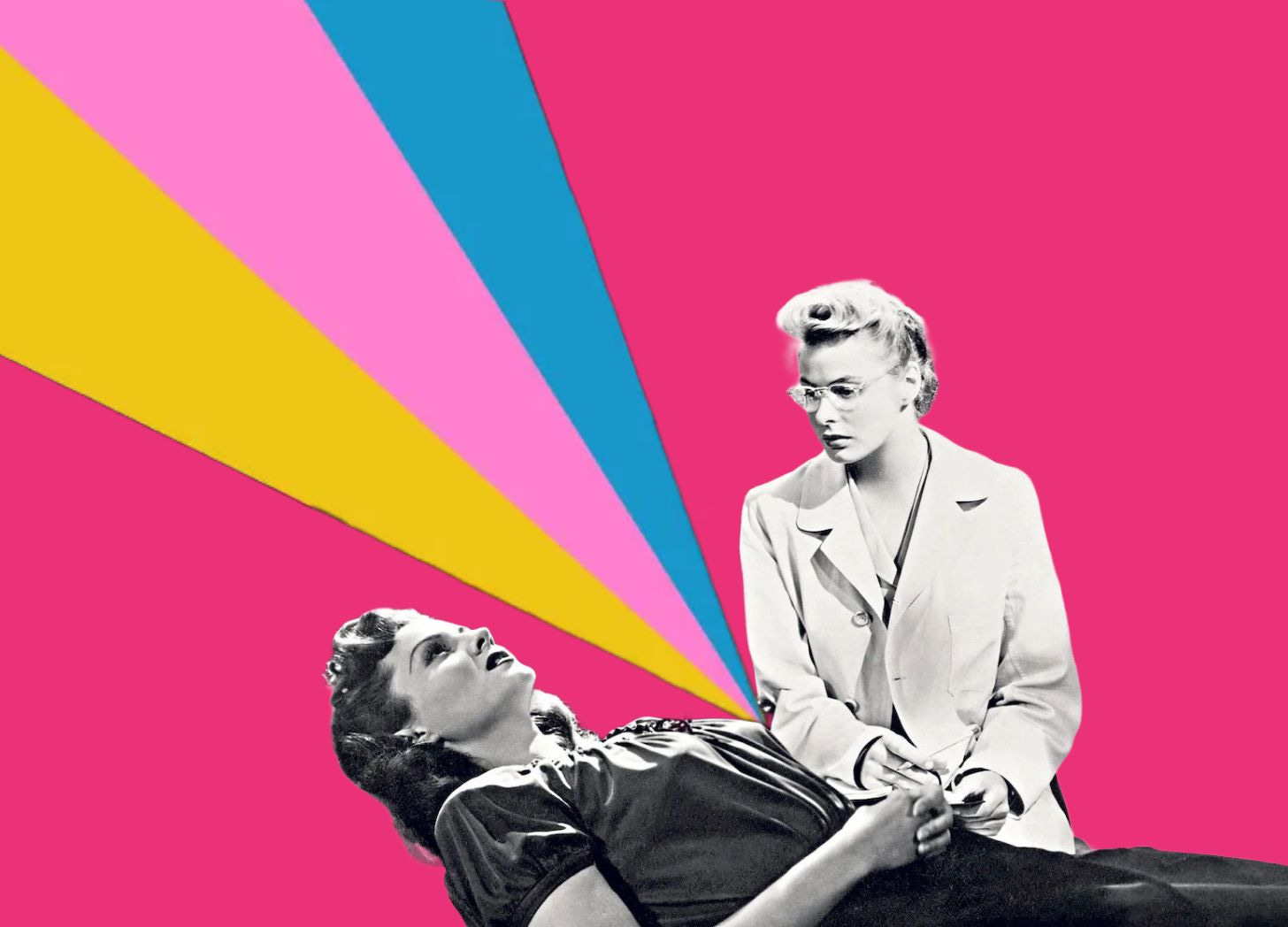
In a recent New York Times essay, “The Fool’s Guide to Major Life Decisions,” Makenna Goodman describes swapping her therapist for an astrologer. It’s a lighthearted piece that elevates astrology at the expense of a therapy relationship that has grown stale.
When Magic Is Positioned Against Care
My issue with the piece is that it taps into a larger cultural narrative, one where magic is positioned in opposition to therapy, medicine, and institutional care. I understand the impulse.
Over the course of hundreds of astrology and tarot readings, I have encountered people who have suffered at the hands of incompetent therapists and, more often, crooked psychiatrists with ties to pharmaceutical companies. I have personally been misdiagnosed and overmedicated.
As a reader, people come to me because they are afraid of being told they are crazy, sent away, or simply made to feel that their problems do not matter.
I am not going to judge you for hearing voices, or for that unspeakable thing you did that you can’t tell anyone about. Your therapist can’t tell the future, but I can certainly tell you what to watch for next year. You want advice? Press hard enough, and I will give it. Is your boyfriend cheating? I have no idea, but if you want to go there, let’s pull a card.
It’s fun, right? Therapists have rules and want to talk about your childhood, but visiting the oracle feels like magic. You get a glimpse of something larger than yourself. And if you do not like what I have to say, what authority do I have? You can declare the whole thing a scam, and no one is going to argue with you.
It sounds appealing in theory. But the truth is that it’s hard to unhear anything.
The Real Harm
Like therapists, readers can cause real harm to their clients. I have had more than one reading where an otherwise competent astrologer said something inappropriate. In the best cases, these were seemingly innocuous predictions that touched real trauma. The worst was an astrologer telling me, in the spring of 2020, that he saw a “death marker” in my year-ahead chart.
Unlike therapy, astrology is an unregulated field. While I can say with confidence that I practice with integrity and that my knowledge comes from a long lineage of skilled astrologers, there is no system that backs that up.
Anyone can go on TikTok or YouTube claiming to be an astrologer. And if that practitioner acts out of line, there is no governing body that can revoke their ability to practice.
Astrology Is NOT Therapy
All of this aside, there is a simpler truth: astrology is not therapy. Astrologers are not trained to handle the same issues as therapists. Complex trauma and conditions such as schizophrenia and bipolar disorder are real and require skilled, careful treatment.
When I say I don’t judge my clients for hearing voices, I mean it. I also don’t try to diagnose or fix them because that’s not my job.
What finally forced me to confront my own issues was being overwhelmed in my practice by clients who desperately needed therapy. Many were too afraid to seek it. Others were exhausted by the process of trying to find help, so they turned to tarot, astrology, and other forms of divination.
Unlike our New York Times reader, many of them didn’t have the luxury of quitting therapy. They were desperate for anyone to talk to.
I threw myself into therapy in part to better understand my clients. Like many astrologers I know, I have seriously considered going to school for counseling so that I can better serve the people who come to me.
This is not to say astrology doesn’t work. As a divinatory practice spanning thousands of years, it works very well. For many things. But it’s probably not the system best equipped to manage your mental health.
I care so deeply about this because, in many ways, astrology saved my life.
Before I had access to therapy, astrology gave me tools to address my pain. Learning my birth chart allowed me to see my life differently. Suddenly, I had a story that connected years of self-harm and mental anguish to generations of ancestral suffering.
Astrology helped me see myself on the days I couldn’t bed, when I couldn’t stop crying. Not just crying, but sobbing. The kind of deep-rooted sobs that come from an ancient place.
“It felt like a haunting,” I told my therapist during our first session. “I know everything is okay, but there is something inconsolable inside me, and I cannot reach it.”
The rising sign of the horoscope marks the moment of one’s first breath. It’s the point that weaves us into the sky, into the vastness of the universe and the breadth of human history. Seeing myself as interconnected across space and time gave me hope.
Why I Needed Both
Before astrology, I tried all the things: talk therapy, sound therapy, micro-dosing, macro-dosing, yoga, pharmaceuticals. Nothing could fully exorcise the haunting.
What finally shifted things for me was EMDR and a therapist who was open to integrating my magical practice into our work.
For three years I met with my astrologer and therapist every week.
Looking to the sky gave me context: I could see the good periods and the bad ones — and, most importantly, I could see that the bad ones wouldn’t last forever.
My therapist gave me the tools to access my inner landscape, the ability to rewrite memories and shape a new narrative.
Both of those experiences were necessary for my evolution or, as I refer to it, “the great calming of my soul.” The details of which make a great story for another day.
For now, I’ll end where I began …
Please don’t quit therapy for an astrologer.
About Me
Vivi Henriette is a Los Angeles-based astrologer and tarot reader whose collaborative approach to divination weaves together storytelling and mythology, creating a space for clients to explore their personal narratives. She hosts the Los Angeles Astro Salon at the Philosophical Research Society, the podcast TALKTALKTALK, and co-organizes LA Astro Fest.
Let Me Be Your Astrologer
If you’re looking for one-on-one guidance, I have a few spots open for December and January and would love to work with you
Club Astro Office Hours

Join me for an intimate, community-driven space where we discuss the current sky, explore your questions, and share practices together. Office Hours are designed to be conversational, flexible, and an opportunity to connect directly with me and with fellow astrologically curious minds, building knowledge and community simultaneously.
Office Hours are held online once a month and are open to all Club Astro members.
The next office hours are on Thursday, December 18th, at 4pm PT.
Joining is simple: Your paid subscription to ART of the ZODIAC provides access to Club Astro. If you’re already a supporter, welcome to the club! You’re all set.
As a person who is a high functioning bipolar nerd. I agree 💯 with you. Except I need a wee little bit of pharmaceuticals to keep myself balanced. Tarot, divination and astrology all help me understand the energies we as a collective are experiencing and myself as an individual.
Really valued this perspective. As a training counsellor who benefits from a blend of therapy, woo and pharmaceuticals when needed, it's not black and white and very individual. It was fascinating to discuss an ethical dilemma in class that was about using astrology in the counselling room - some STRONG opinions from my classmates l. One nuance I'd add - certainly in the UK therapy isn't very well regulated! Anyone can call themselves a therapist... Terrifying really!